

The Data-Driven City: Three Remedies for Smarter Urban Planning
 Dagmar Celuchova Bosanska
Navigation
Have you ever arrived in a city that immediately energized you—a place where you effortlessly connect with people, discover vibrant communities, and find your purpose? Successful cities are engines of human innovation, social bonds, and economic activity. The McKinsey Global Institute estimates that the world’s economically strongest cities generate up to 75 percent of global GDP. But planning such thriving urban environments is enormously challenging, because cities resemble living, breathing organisms that constantly grow and transform.
The Failures of Top-Down and Bottom-Up Approaches
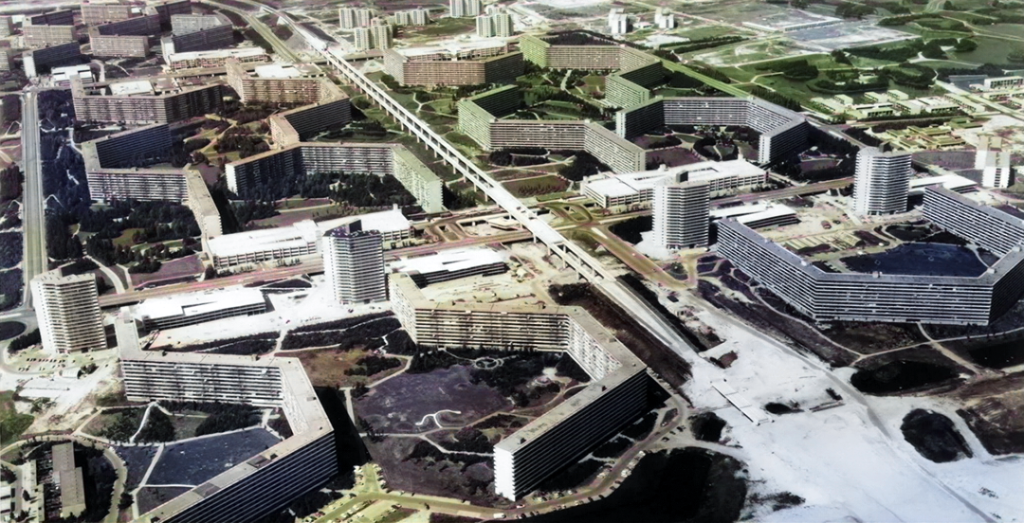
How do you plan for a city as if it were a living organism? During the modernist era of post-war urban renewal, Le Corbusier’s philosophy dominated: “City planning is too important and complex to be left to citizens.” This top-down central planning—characteristic of both Western urban renewal and communist regimes—produced neighborhoods where residents felt depressed, marginalized, and stripped of their creative potential and sense of community. We see the results across the globe, from demolished public housing projects in St. Louis to the ongoing challenges of places like Petržalka in Bratislava.
The pendulum then swung toward bottom-up approaches, where citizens, developers, and entrepreneurs organize and create solutions without strong state guidance. Jane Jacobs famously wrote in 1961 that “cities have the capability of providing something for everybody, only because, and only when, they are created by everybody.” Yet even this approach produces problematic outcomes—controversial developments that ignore height limits, solutions that serve only small local communities while leaving broader urban problems unaddressed.
Data and AI: The First Remedy
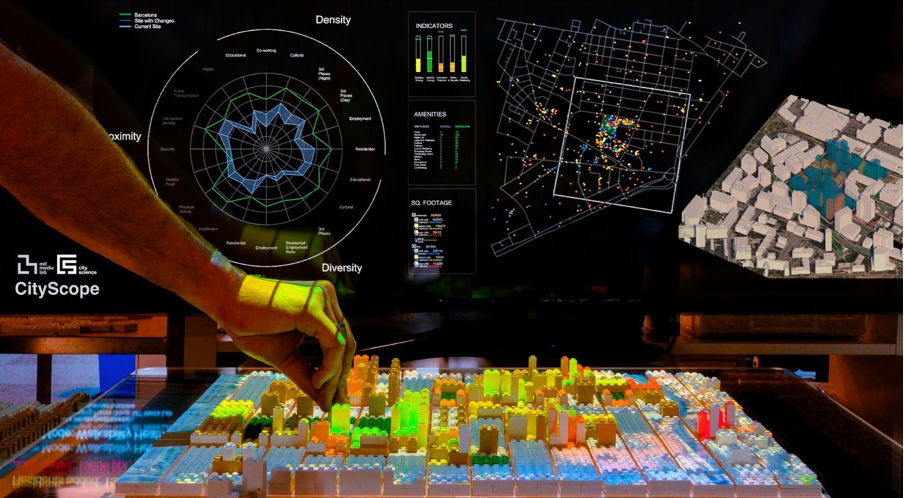
If neither approach works perfectly, what’s the solution? Data represents the first crucial remedy. With quality data, cities can predict demographic shifts, understand local economic trends, and anticipate residents’ needs. This enables agile responses to unexpected challenges—whether climate change requiring green infrastructure or pandemics demanding redesigned public spaces. Perhaps those ambitious modernist neighborhoods would have succeeded if planners had possessed data-driven predictions about demographic and economic development. For a data-driven city, quality data is what quality ingredients are to a gourmet restaurant.
Partnerships and Experimentation: Completing the Cure
Effective multi-sector partnerships form the second remedy. In the era of data and artificial intelligence, new threats emerge: if partnerships between government, citizens, nonprofits, and businesses aren’t balanced, the private sector could dominate data and technology for its own benefit. This nearly happened in Toronto’s proposed “smart neighborhood” developed by Google—a cautionary tale that demonstrates why participatory approaches with proper oversight matter. Technology must serve all citizens, not extract value from them.
The third remedy is experimentation and pilot projects. These allow cities to begin their transformation today, without massive investments or miraculous technology. Consider New York’s Times Square: a months-long experiment transformed it into a pedestrian zone, and when no traffic catastrophe occurred, the temporary became permanent. Experiments let us glimpse alternative realities at low cost and low risk. As we might say: “In a healthy body, a healthy mind”—or at the collective level: “In a healthy, collaboratively designed city, a healthy, creative community.” We must all work together—residents, local government, and civil society—to become active participants in data-driven urban planning, ensuring that new neighborhoods are built not just for us, but with us.
If you like to explore more about this topic, watch the presentation by clicking the button below.
Contributors: Dagmar Celuchova Bosanska